




Child Development Researchers Warn: Up to 3 in 10 School Kids Struggle With Handwriting. But This Disappearing Ink Book Makes Practice Easy.
Parents and grandparents are getting kids writing their own name with this disappearing ink grooved book, without tracing sheets, screens or tears.
My four year old, Leo, spent three weeks sneaking my handwriting into preschool. Every morning he'd ask me to write his name on his palm, "teeny tiny, so nobody sees." So he could copy it at school.
Here's what finally worked. The stuff I wish somebody had told me a year ago.
Because if your kid, or your grandbaby, knows every letter but falls apart the second you hand them a pencil... it's not them. And it's not you.
He Knew Every Letter. I Tried Everything Anyway.
This kid reads the cereal box to me. He'll spell L E O out loud to the cashier at Target. But hand him a crayon? Sticks. He knew it. He just couldn't make it.
So here's my list. Be honest, how many have you done?
Tracing sheets. Stacks. Printed at 9 o'clock at night so he wouldn't see. I lied to my husband about the ink.
Yellow highlighter. Perfect on top of the yellow. Take it away? Sticks.
Workbooks. Two of them, half done, under the couch.
Pencil grips. Ripped off in about four seconds.
Play dough and beads. Great month for beads. Terrible month for his name.
"Just wait, he'll get it." I waited. He started hiding his hand.
Then came the Monday he sat by the front door sobbing. "I don't want to do names."

Writing His Name Is One of the Best Early Clues for Reading. I Felt Sick.
Then I looked up the research. In the early grades, kids spend up to 60 percent of the school day on hand work like writing, coloring and cutting[1]. And handwriting problems affect 10 to 30 percent of school kids[2]. And writing your own name is one of the best early clues for how a child will read and spell later[3].
Kindergarten was ten months away.

The Page Wasn't Flat. That Was the Whole Answer.
It was my nephew's birthday. My sister in law sent me for the tape, and I opened the wrong drawer. A kid's workbook, pen stuck in the spiral.
My thumb slid across the page, and something was weird. The letters were pressed INTO the paper. Real grooves, like tiny little ditches.

Driving home, I thought about that yellow highlighter. On top of the yellow, he wasn't really writing. He was coloring over my letter. His eyes were doing most of the work. And on flat paper, there's nothing to keep the pencil on the line. So the second the yellow was gone, so was the L. And every night he decided he was bad at it.
I said it out loud, alone in the car. "Oh my gosh. It was never his hand. It was the page."
Grooves Hold the Pen on the Letter. The Ink Fades So He Can Go Again.
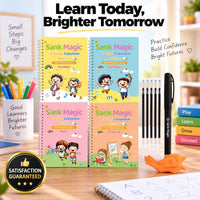
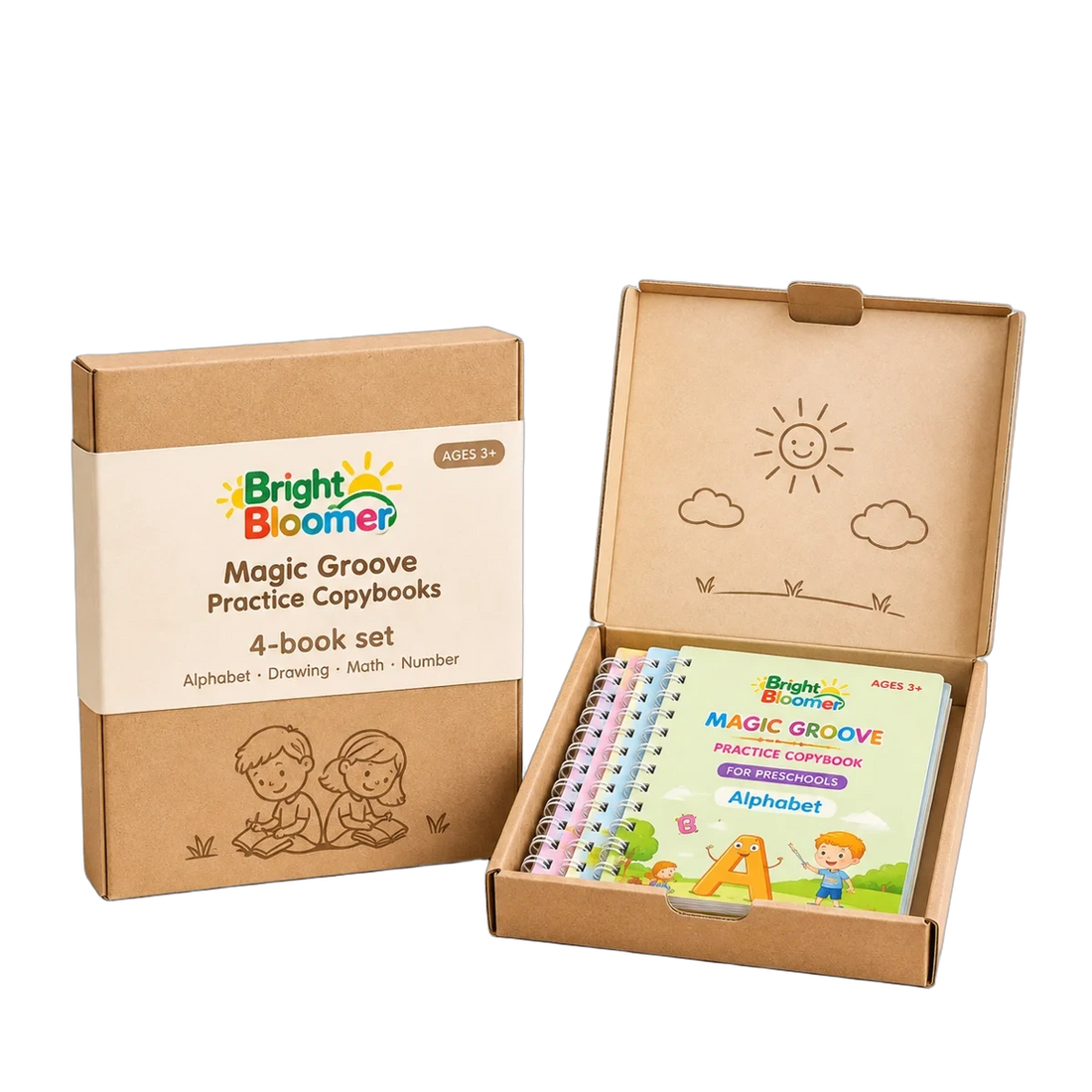
Two nights later I found it online. The Magic Copybook Practice Set: four grooved books for letters (capitals and small letters), numbers, math and drawing. And five refills in the box, thank God.
How It Works
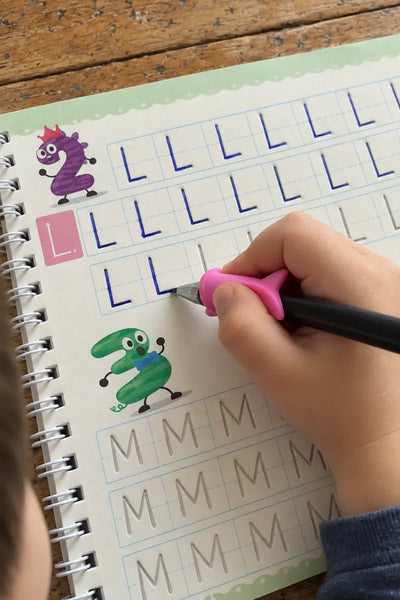
The pen drops in and follows the letter.
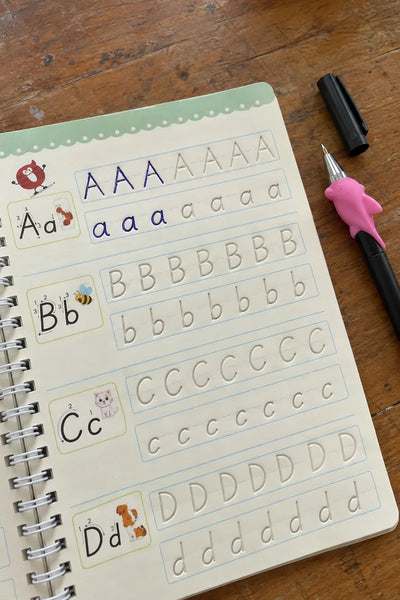
In about 30 minutes the page is clean.

Then try the same letter on plain paper.
Every letter is a groove. The pen tip drops right in and follows it. If his hand wobbles, the groove keeps him on the path. So he's not practicing the slip anymore. He's practicing the letter.
And because the ink fades, a bad L doesn't just sit there where he can see it. Wait half an hour. Gone. Go again. One tracing sheet gave him one try. This page gives him as many as he needs.
No screens. No mess. No ink on my couch. It fits in my purse for the car and the doctor's office.
The first night, I didn't say a word. I left the alphabet book open on the kitchen table with the pen next to it and went to do the dishes. Then I heard the chair scrape. Next day, after lunch, the page was clean, and he came running, totally outraged. "Mom! Who took my letters?!"
Then he climbed right back up and did them again.

From the Groove to Plain Paper in Three Weeks. Here's Exactly What We Did.
This is what I get asked about most. Steal it.
Week 1 Groove only. Just L, E and O. Ten or fifteen minutes. When one came out wrong, I said nothing. It faded, and he tried again.
Week 2 Groove, then paper. I slid a plain sheet next to the book. L in the groove, then L on the paper. Groove, paper. Groove, paper. The paper ones were a mess at first. By the end of the week, I swear, the L looked like an L. Then the E caught up. The O was always easy, it's just a circle.
Week 3 Paper first, groove when he got stuck. He started reaching for the plain paper on his own.

Three weeks after the book came, his teacher stopped me at pickup holding a painting. Big orange sun. A dog with six legs. And at the top, in big wobbly letters... LEO.
On plain paper. In HIS handwriting. Not mine. Not hers. His.

Grandma Wanted Her Own

We got a second set for my mom's house. She does it with him on Saturdays now. It's their thing.
She's 68. The first time she ran her finger down a groove, she goes, "Why didn't anybody have these when you were little?"
If you're a grandparent reading this because your grandbaby is the one with the hand under the table, this is a really sweet thing to do together. Twenty quiet minutes at a table. No screen. Just you, them and the letters.
Why the Groove Works When Sheets Didn't
| Tracing sheets | Workbooks | Magic Copybook | |
|---|---|---|---|
| Keeps the pen on the letter | ✕ | ✕ | ✓ |
| Wrong tries fade away on their own | ✕ | ✕ | ✓ |
| Same page, again and again | ✕ | ✕ | ✓ |
| No printer ink to buy | ✕ | ✓ | ✓ |
| No screens | ✓ | ✓ | ✓ |
What the Listing Promised, and What I Actually Saw
The listing promised a better grip, a steadier hand and more focus. I'd read that about every tracing pad in the store. So I just watched.
Leo keeps the little dolphin grip on his pen now. His lines are steadier. The boy who fought one tracing sheet now sits at the table for twenty minutes.
It's made for preschool up through early school, so it's coming to kindergarten with us.
Every piece has a job
One box. Everything you need to start tonight.
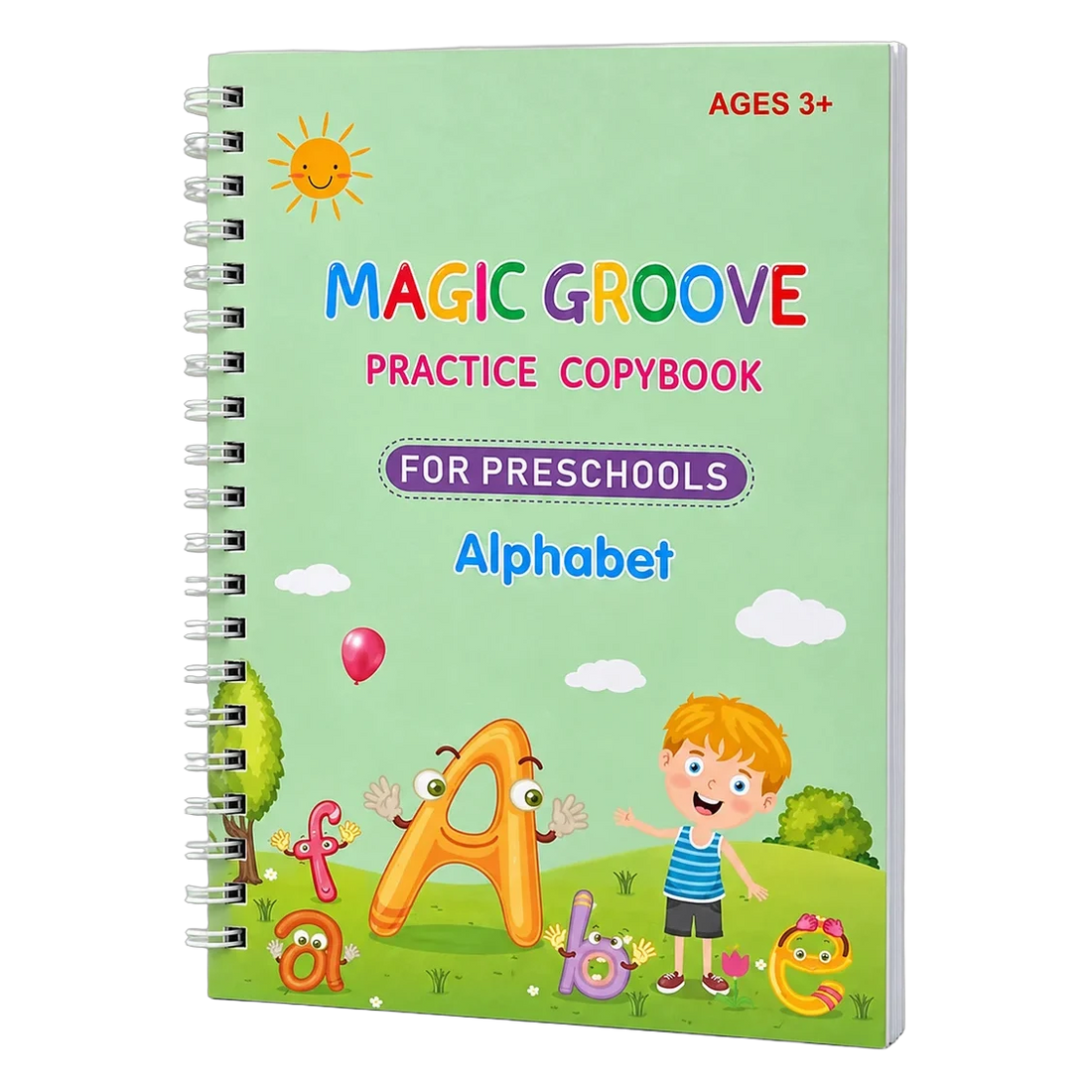
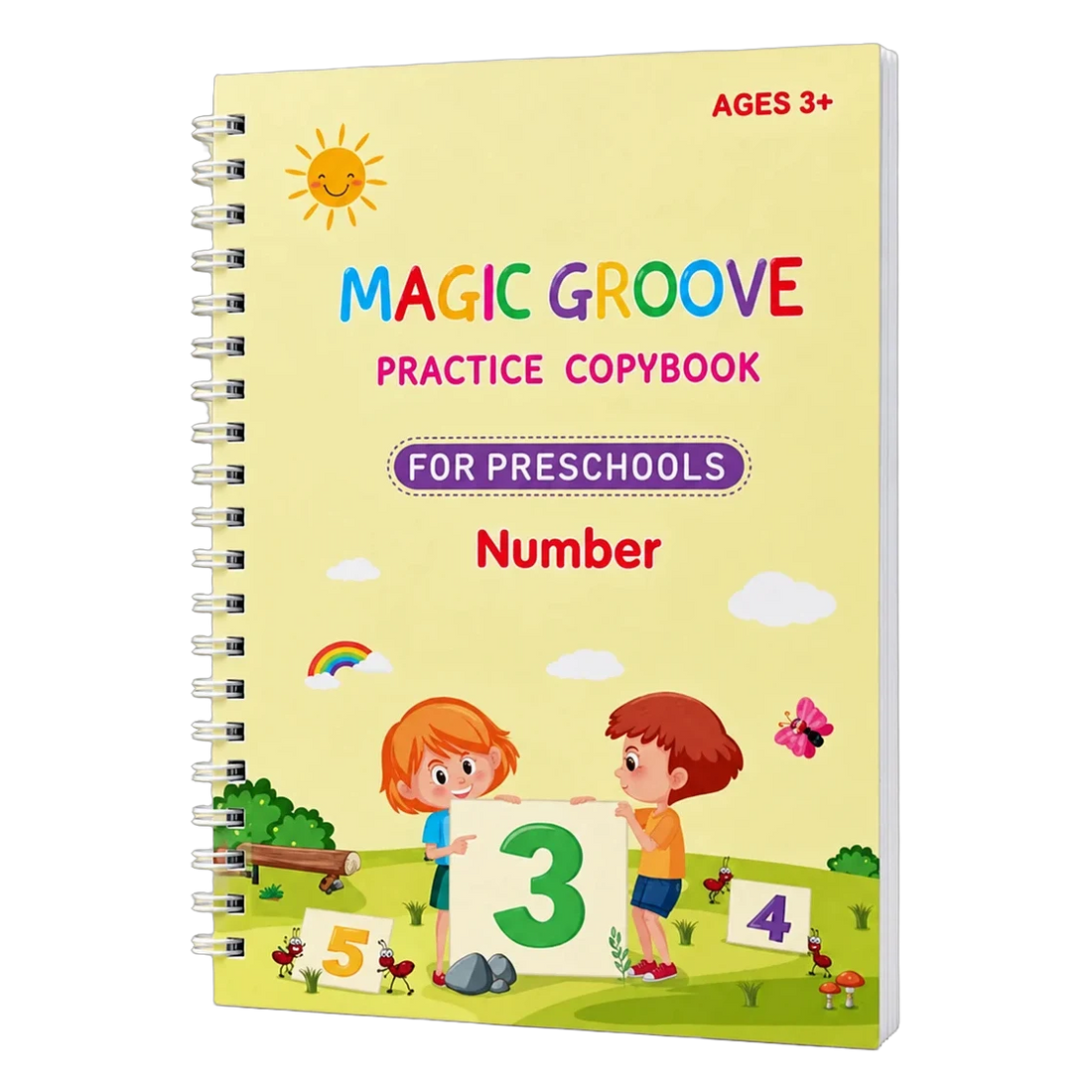

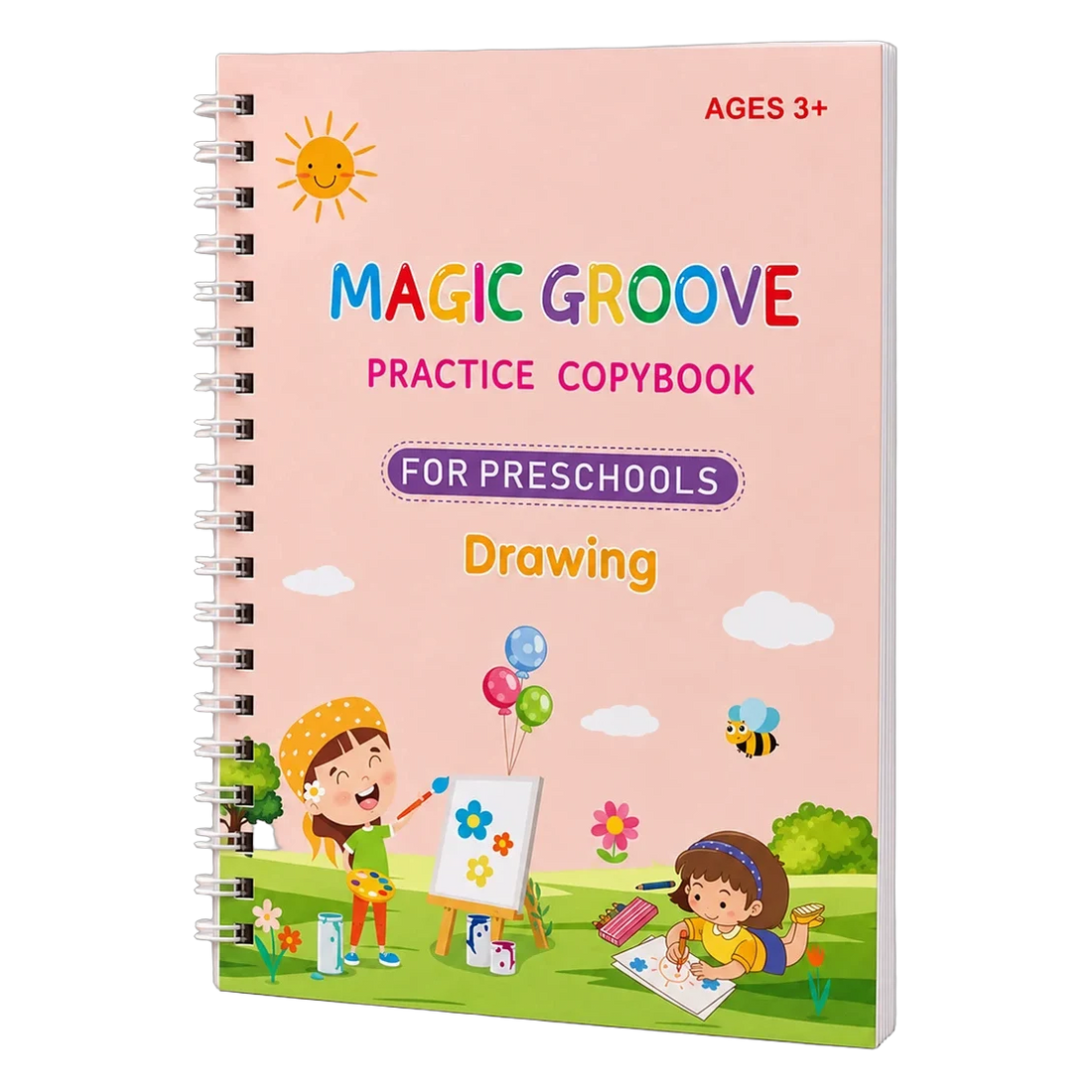
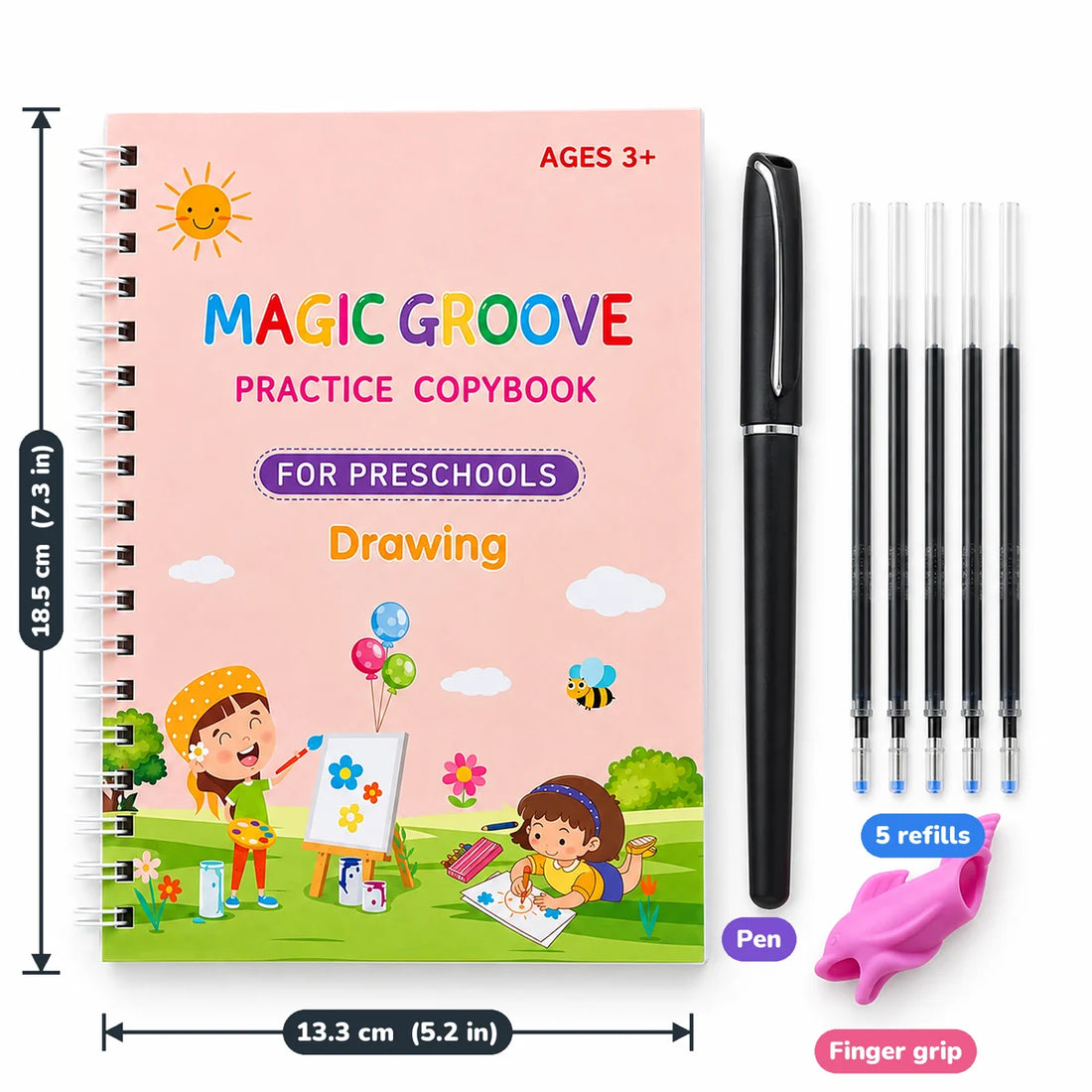
- 4 grooved booksLittle hands learn each shape by feel
- 1 magic penInk fades, so every page is new again
- 5 ink refillsPractice never stops for low ink
- Dolphin finger gripGuides small fingers into a good hold
- Reusable pagesMistakes vanish, so trying feels safe
- Travel size booksPractice in the car or at Grandma's
Four Books for Less Than I Spent on Printer Ink
Before the drawer, I was paying for ink every month for sheets he did once and quit. Plus two workbooks, pencil grips and a month of beads.
The Magic Copybook set is $37.99 for four books. Less than I blew on printer ink, honestly. And every page gets used again and again. Free shipping. Buy 2, save 20%. Buy 3, save 30%.
Please Don't Just Wait
Kindergarten is coming. Every paper starts with a name at the top.
When yours comes, do what I did. Leave the alphabet book open on the table. Don't say a word. Go do the dishes. Listen for the chair.
Two sets is 20% off. That's how we got Grandma's. And if you've got a grandbaby doing the hand thing? That's your Christmas present right there. Not another toy.
Last Monday, He Ran Into Class Ahead of Me
He put his shoes on by himself and didn't even look back.
P.S. He signed Grandma's birthday card last week. Every letter. By himself. She called me just to read it to me. Like I wasn't standing right there when he did it. It's on her fridge, and nobody touches it.
P.P.S. Four books, the pen, five refills and the finger grip. Easy returns. And you can finally quit buying printer ink.
Your Questions, Answered Straight
What is a grooved magic copybook?
It's a practice book with letters, numbers and shapes pressed into the paper as grooves. The pen tip sits in the groove and follows the path, so a small hand that wobbles stays on the letter. The ink fades on its own, so the same page can be used again and again.
How does the disappearing ink work, and how long does it take to fade?
The pen writes in ink that fades on its own in about 30 minutes. Once it's gone, the page is clean and ready for another try, with nothing to erase. When a pen refill runs low, swap in a new one. Five refills come in the box.
When should a child be able to write their own name?
Many children start writing their first name around age 4 to 5, and kindergarten teachers often ask kids to write it on their work from the first weeks. Every child moves at their own pace. Knowing the letters and forming them are different skills, so a child can know every letter and still need practice making them.
Why does my child know their letters but can't write them?
Knowing a letter is a job for the eyes and memory. Writing it is a job for the hand: start in the right spot, go the right way and stop in the right place. Lots of kids can say every letter and still freeze at the pencil. That's normal, and it gets better with short hand practice.
How soon will I see a difference?
Every child is different, but because the pen stays in the groove, you can see neater letters on the page from the first sessions. Real progress comes from short practice most days. Many parents notice the bigger change in confidence, when their child sits down to practice on their own.
Can a copybook replace help from a teacher or occupational therapist?
No. It's a practice tool for home. If you're worried about how your child holds a pencil or forms letters, talk with their teacher or an occupational therapist. Many parents use the copybook alongside that help for short daily practice.
What age is the Magic Copybook for?
Ages 3 and up. It fits preschool, pre-K and kindergarten kids who are learning to write letters, numbers and their own name. Early school kids who need extra practice use it too.
What comes in the Magic Copybook Practice Set?
Four books: Alphabet (capital and small letters), Numbers, Math and Drawing. Plus one pen, five ink refills and a dolphin shaped finger grip. Each book is about 5.2 by 7.3 inches, small enough for a purse or a car bag.
How much does the Magic Copybook cost?
The set is $37.99 with free shipping. Buy 2 and save 20%, or buy 3 and save 30%, which helps when you have more than one child or want one for a cousin or a grandchild.
What if it's not right for my child?
Easy returns. You can try it at home with your child and see how they take to it.
- Better pencil gripThe dolphin grip guides little fingers into a good hold.
- Steadier linesThe groove keeps each stroke on the path.
- Longer focusShort, happy practice that ends before the tears.
- Reusable pagesInk fades, so every page is new again.

Pick Your Set
- Free shipping
- Easy returns
- Secure checkout
ADVERTISEMENT. This page is marketing for the Magic Copybook Practice Set from Bright Bloomer. An illustrative story based on experiences parents share. This is a learning toy for practice at home and is not a substitute for advice from a teacher or therapist.
Sources
- Caramia, S., Gill, A., Ohl, A., and Schelly, D. (2020). Fine motor activities in elementary school children: a replication study. American Journal of Occupational Therapy, 74(2).
- Feder, K. P., and Majnemer, A. (2007). Handwriting development, competency, and intervention. Developmental Medicine and Child Neurology, 49(4).
- National Early Literacy Panel (2008). Developing Early Literacy: Report of the National Early Literacy Panel. National Institute for Literacy.