




Kids Under 8 Average 2.5 Hours a Day on Screens. 7 Reasons Letter Practice Turns Into a Fight, and the Book That Keeps Practice Short and Calm.
From Gus's mom, a dental hygienist, about ink that fades on its own and letters pressed into the page. For parents and grandparents who are tired of practice night.

My son Gus is five. I once paid him a whole bag of gummy bears to trace one row of letters. He ate the bears, and the row stayed empty. Most nights, two minutes in, he'd make one wobbly B, I'd point at it, and he'd end up under the table. Here's what I figured out, so you and your little one, or your grandbaby, can skip some of those nights.
The fight doesn't start when they sit down. It starts at the first mistake.
Gus will build a Lego garage for two hours. A lot of kids who "hate writing" will happily sit and color or build for an hour. Sitting isn't the issue. The trouble starts the moment a letter comes out wrong and stays there on the paper for everyone to see.
Then a grown up does what any loving grown up does. I pointed at it. I said "let's fix that bump." And to a five year old, that sounds a lot like "you got it wrong." Nobody did anything bad here. The sheet just keeps every mistake in plain sight.

Every fight makes the next practice harder, and screens are happy to fill the gap

A few rough nights and kids start to remember practice as the hard part. Gus started groaning when he saw me get the pencils out. So the practice gets skipped, and the evening goes to something easier.
Young kids already get plenty of easier. Kids up to age 8 spend about two and a half hours a day with screens[1]. A calm, hands on habit at the table is worth starting early, before "writing time" becomes the thing everyone dreads.
A flat sheet gives one try, keeps the mistake, and lets the pencil wander
On a printed sheet, nothing holds the pencil on the line. A small hand wobbles, slides off the letter, and the shape comes out bent. That bent letter is now permanent. Erase it and the paper smudges or tears. Leave it and it's the first thing everyone looks at.
So the sheet does two jobs badly at once. It lets the wobble happen, and then it keeps the wobble on display. At our table, that was the whole fight.
The ink fades on its own, so there's nothing left to point at
The Magic Copybook comes with a pen whose ink fades by itself in about 30 minutes. The letters your child traced are there for a while, then the page is clean and ready to use again.
That changed the whole mood at our house. A wobbly B doesn't stay up for me to correct. It goes away by itself. And a child who knows the page will be clean again has a lot less to lose by trying. Same page, fresh start, as many times as they like.
Why the Groove Works When Sheets Didn't
| Tracing sheets | Workbooks | Magic Copybook | |
|---|---|---|---|
| Keeps the pen on the letter | ✕ | ✕ | ✓ |
| Wrong tries fade away on their own | ✕ | ✕ | ✓ |
| Same page, again and again | ✕ | ✕ | ✓ |
| No printer ink to buy | ✕ | ✓ | ✓ |
| No screens | ✓ | ✓ | ✓ |
The letters are pressed in as grooves, so you don't have to steer their hand
Every letter in the book is a groove pressed into the paper. The pen tip drops in and follows it. When a little hand wobbles, the groove helps keep the pen on the letter.
So the guiding comes from the page, not from a grown up leaning over their shoulder. Gus's grandpa used to sit beside him with the eraser, fixing every letter. Now he sits there with his hands on the table and lets the groove guide the pen.

Moving from the groove to plain paper is a simple, step by step habit

The groove is where the hand practices the path. Then you bridge to paper, at your child's own speed.
Start with the groove only. Next, put a plain sheet beside the book: a letter in the groove, then the same letter on the sheet. Later, try the sheet first and go back to the groove whenever they get stuck. The sheet letters will be messy at first. That's normal, and there's no clock on it. We're on the second step, and that's fine.
How It Works
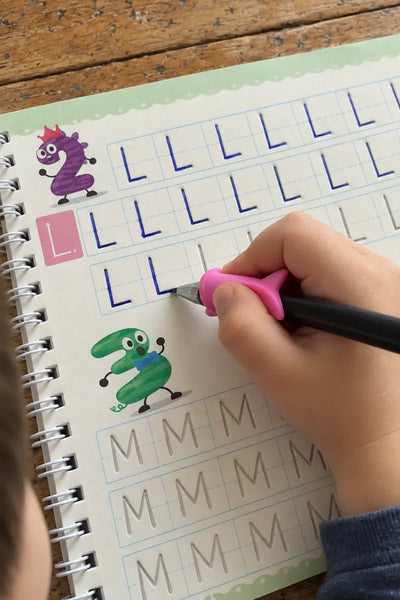
The pen drops in and follows the letter.
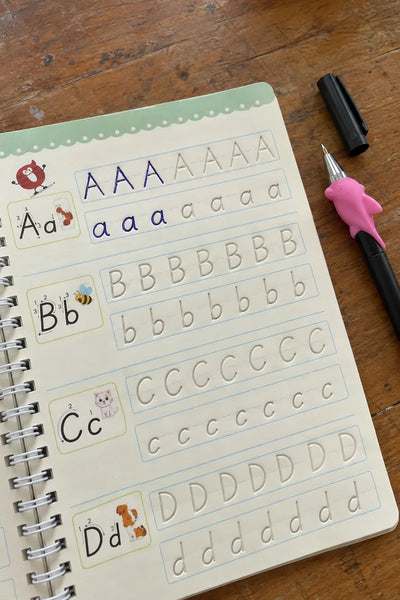
In about 30 minutes the page is clean.

Then try the same letter on plain paper.
- Free shipping
- Easy returns
- Secure checkout
Four books mean short practice that stays fresh, from preschool into early school
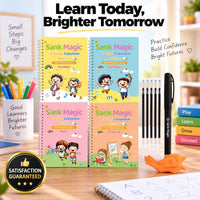
The set has four books: letters (capitals and small letters), numbers, math and drawing. Plus the pen, five refills and a dolphin shaped finger grip. Each book is about 7 by 5 inches, small enough for a purse, a backpack or Grandpa's truck.
Four books help with the fight, too. Tired of letters tonight? Do a drawing page. Short, happy practice beats long, grumpy practice every time. No screens, no mess.
- Better pencil gripThe dolphin grip guides little fingers into a good hold.
- Steadier linesThe groove keeps each stroke on the path.
- Longer focusShort, happy practice that ends before the tears.
- Reusable pagesInk fades, so every page is new again.
Our rule now is one page, then teeth. Last night Gus argued with me because practice was over. Ending while they still want more gives the next night a better start.
Questions Parents Ask
What is a grooved magic copybook?
It's a practice book with letters, numbers and shapes pressed into the paper as grooves. The pen tip sits in the groove and follows the path, so a small hand that wobbles stays on the letter. The ink fades on its own, so the same page can be used again and again.
How does the disappearing ink work, and how long does it take to fade?
The pen writes in ink that fades on its own in about 30 minutes. Once it's gone, the page is clean and ready for another try, with nothing to erase. When a pen refill runs low, swap in a new one. Five refills come in the box.
Is it a screen free activity?
Yes. It's paper books and a pen, with no app, no tablet and no screen. Many families use it as a calm, screen free activity after school, in the car or at a restaurant.
What skills does the Magic Copybook build?
It builds the hand skills that writing needs: pencil grip, pen control, a steady hand and focus. The Alphabet and Numbers books teach how to form each letter and number, the Math book practices early sums, and the Drawing book builds the lines and shapes that come before writing.
Can we do just one page a night?
Yes, and it's a great plan. One calm page every day beats a long fight once a week. The ink fades in about 30 minutes, so the page is ready again tomorrow.
What age is the Magic Copybook for?
Ages 3 and up. It fits preschool, pre-K and kindergarten kids who are learning to write letters, numbers and their own name. Early school kids who need extra practice use it too.
What comes in the Magic Copybook Practice Set?
Four books: Alphabet (capital and small letters), Numbers, Math and Drawing. Plus one pen, five ink refills and a dolphin shaped finger grip. Each book is about 5.2 by 7.3 inches, small enough for a purse or a car bag.
How much does the Magic Copybook cost?
The set is $37.99 with free shipping. Buy 2 and save 20%, or buy 3 and save 30%, which helps when you have more than one child or want one for a cousin or a grandchild.
What if it's not right for my child?
Easy returns. You can try it at home with your child and see how they take to it.

Pick Your Set
- Free shipping
- Easy returns
- Secure checkout
The Magic Copybook Practice Set is a learning toy for writing practice at home. It is not a substitute for advice from a teacher, doctor or occupational therapist.
ADVERTISEMENT. This page is marketing for Bright Bloomer, which sells the Magic Copybook Practice Set. It is not independent editorial content. An illustrative story based on experiences parents share.
Sources
- Common Sense Media (2025). The 2025 Common Sense Census: Media Use by Kids Zero to Eight.