





Quick answer. Independent play is a learned skill, not a personality type, and you can teach it. Start by playing near your toddler, then slowly do less: talk less, lead less, and step back a little further each day. Pair that with a small, uncluttered set of open ended toys they can reach, and most toddlers build the ability to play alone in a few weeks.
If your toddler follows you from room to room, hands you a toy the second you sit down, and dissolves the moment you step into the kitchen, you are not doing anything wrong, and neither is your child. You are meeting one of the most common frustrations of the toddler years, and it comes from a hopeful place: your child likes being with you.
The good news is that playing alone is a skill, like walking or using a spoon. Some children pick it up almost by accident. Others need to be taught it, gently and on purpose. Here is how.
Why some toddlers do not play alone
A few ordinary things get in the way, and none of them mean your child is behind.
Attention and connection come first for a toddler, always. If independent play has usually meant the fun stops and the parent disappears, a child learns to resist it. Sometimes the issue is the opposite of neglect: a child so used to an adult narrating and directing play that they do not yet know how to generate their own. And very often the setup is working against everyone, with a mountain of toys so overwhelming that the child cannot settle on any of them.
The method below addresses all three.

Shop this
How to teach a toddler to play independently: the stay then fade method
The core idea is simple. You do not push your child away to play alone. You start beside them and gradually, over days, do less and less until they barely notice you have stepped back.
- Days one to three, be there but quiet. Sit on the floor near your child while they play. Resist the urge to run the play. Do not ask a stream of questions or suggest what to build. Just be a calm, present body nearby. Comment lightly and rarely. Your job is to be the safe base, not the entertainment.
- Days four to seven, shrink your part. Keep sitting close, but respond a beat slower and do a little less. When they hand you a block, admire it briefly and hand it back rather than taking over. Let small silences sit. You are teaching them that they can carry the play themselves.
- Second week, begin to fade. Move from the floor to a nearby chair. Then to a task in the same room, narrating what you are doing: "I am folding this laundry right here while you build." The child still has you in sight, which is what matters, but you are no longer part of the game.
- After that, extend the distance and time in small steps. A minute in the next room, then five, always returning warmly before they melt down rather than after. Coming back before the panic teaches them that you always come back, which is the security that makes independence possible.
Go at your child's pace. If a step causes real distress, drop back to the previous one for a few more days. This is not a race.
Set the stage so alone play can happen
Even the best method struggles in the wrong environment. Two changes make an outsized difference.
Offer fewer toys, not more. A child faced with everything chooses nothing. Put most toys away and leave out a small, rotating selection of open ended ones. Swap them every week or two so they feel fresh.
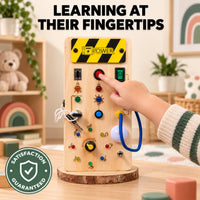
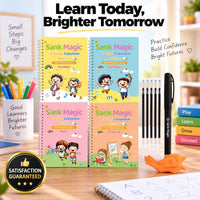
Choose toys that do the work of holding attention. Open ended, hands on things, a busy board, blocks, a busy book, invite a child to keep going on their own. Toys that simply perform, light up, and play a tune tend to create a watcher rather than a player.
What builds independent play, and what blocks it
A few small conditions make the difference between a child who settles into play and one who cannot.
| Helps a toddler play alone | Gets in the way |
|---|---|
| A few open ended toys within easy reach | A screen as the default rescue |
| Playing nearby without directing | Hovering and running the play for them |
| A calm space with only a little out | A cluttered pile that overwhelms |
| Starting together, then quietly stepping back | Leaving abruptly with nothing set up |
Frequently asked questions
At what age can a toddler play independently?
Many children can manage short stretches of solo play from around eighteen months to two years, building to longer periods through the preschool years. Independent play grows gradually, so a few minutes at first is a real success.
How long should a toddler be able to play alone?
Expectations should be modest. A few minutes for a young toddler, building toward fifteen or twenty for a preschooler. Extend the time in small steps rather than expecting a long stretch at once.
Is it bad that my toddler always wants me to play?
Not at all. It reflects a healthy attachment. The stay then fade method works precisely because it keeps that connection intact while slowly building the skill of playing alone.
What are the best toys for independent play?
Open ended, hands on toys a child can operate without an adult: busy boards, building and magnetic toys, busy books, and simple pretend play items. Keep the selection small so it does not overwhelm.
The toys Bright Bloomer makes are built for exactly this goal: hands on, open ended, and self directed, so a child can carry the play alone once you have faded back. But the method is the real engine. Start beside your child, do a little less each day, and keep the toy basket small. Independence grows from the security of knowing you are near, not from being left to it.