




Quick answer. To teach a toddler numbers, skip the flashcards and build number sense through everyday play. Count real objects they can touch, talk about how many and more and fewer during daily life, and play simple counting games. Understanding what numbers mean matters far more than reciting them in order, and it grows through hands on experience, not memorization.
There is a difference between a toddler who can chant "one, two, three, four, five" and a toddler who understands that four means four actual things. The first is memory. The second is number sense, and it is the one that matters. A child can recite numbers like a song long before they grasp what the numbers stand for, and it is the grasping, not the reciting, that sets them up for real mathematics.
The good news is that number sense is built through ordinary play and conversation, no worksheets or screens required. Here is how.
Understand what comes before counting
Real counting rests on a few quiet understandings that develop first.
- Numbers name amounts. A child has to learn that "three" is not just a word in a sequence but a description of how many things there are.
- One object, one number. Counting means touching each object once and saying one number for each, no skipping, no double counting. This takes practice and is harder than it looks.
- The last number counts. When you count a row of blocks and reach "five," five is not just the last block, it is how many blocks there are altogether. This realization is a genuine leap.
- Small amounts can be seen at a glance. Children gradually learn to recognize small quantities, like two or three objects, without counting them one by one. This is a foundation of number sense.
You do not teach these as lessons. You build them by counting real things, together, over and over.

Shop this
Screen free ways to build number sense
Numbers are everywhere in a day. The trick is simply to notice them out loud.
- Count real objects constantly. Count the stairs as you climb, the grapes on the plate, the buttons as you do them up. Touch each one as you count, so one number lands on one object.
- Talk in the language of math. Use words like more, fewer, the same, bigger, and how many in ordinary moments. "You have more strawberries than me. Shall we make them the same?"
- Sort and group. Sorting socks, buttons, or toys by color and size builds the thinking that underlies numbers and patterns.
- Play simple counting games. Board games with a die, hiding and counting objects, or setting the table with one plate per person all make counting purposeful.
- Cook together. Measuring, counting scoops, and sharing things out equally is rich, real math a toddler can taste.
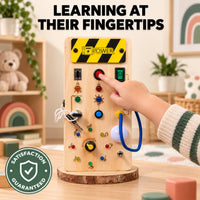
- Use hands on materials. Counting bears, blocks, magnetic tiles, or beads gives a child physical amounts to move, group, and compare, which is how number sense is built.
Keep it playful, and let it be slow
Two principles matter more than any activity. First, keep it light. The moment counting becomes a test, a young child tends to resist it. Weave it into play and daily life, and let it be fun. Second, do not rush to written numerals and sums. Understanding amounts comes first, and it comes through touching and moving real things. The symbols and the arithmetic land far more easily on a child who already knows, in their hands, what the numbers mean.
If you have specific concerns about your child's development, your pediatrician or preschool teacher is a good person to ask.
Reciting numbers versus real number sense
A child can chant numbers long before the numbers mean anything. Number sense is the goal.
| Reciting numbers | Number sense |
|---|---|
| Chanting one to ten in order | Knowing that three means three real things |
| A memorized song | Touching each object once as you count |
| Sounds impressive early | Sets up real mathematics later |
| Learned by repetition | Built by touching and moving real things |
Frequently asked questions
How do I teach my toddler numbers?
Through everyday play, not flashcards. Count real objects they can touch, use words like more and fewer in daily life, sort and group things, and play simple counting games. Understanding amounts matters more than reciting the sequence.
Should a toddler be able to count before school?
Many toddlers learn to recite some numbers and count small groups, but there is wide variation and no need to push. Building an understanding of what numbers mean matters more than the age at which they can count.
What is number sense?
It is understanding what numbers actually mean: that they name amounts, that counting matches one number to one object, and that small quantities can be recognized at a glance. It is the foundation that later arithmetic is built on.
What are good screen free counting activities?
Counting real objects through the day, cooking together, sorting and grouping, board games with a die, and counting with hands on materials like blocks, bears, or magnetic tiles.
Bright Bloomer's hands on toys, from magnetic tiles to sorting and building sets, give a child real amounts to count, group, and compare, which is exactly how number sense grows. Whatever you use, the approach is the same: count real things together, talk about how many all day long, and keep it play, not a test.