






Quick answer. Fine motor skills are the small hand and finger movements a child uses to pinch, grip, and manipulate objects, and they build through everyday practice rather than special equipment. Simple activities like picking up snacks, peeling stickers, squeezing a sponge, and working latches all strengthen little hands. These same muscles later hold a pencil, so this early practice matters.
Fine motor skill is a quiet phrase for something you can watch happening: the way a child learns to pick up one small thing, turn it, and place it exactly where they mean to. It is the foundation under buttoning a coat, using a fork, and, eventually, holding a pencil.
The reassuring part is that you do not need a program or a cabinet of special tools to build it. Ordinary days are full of chances, if you know what you are looking at. Here are practical ways to strengthen little hands, grouped by where they naturally happen.
In the kitchen
- Let your child pick up small snacks one at a time. A pea, a piece of cereal, a single blueberry all demand the pincer grasp, the thumb and finger pinch that is the cornerstone of fine motor control.
- Give them a small pitcher to pour water into a cup. The steadying and tipping is real hand and wrist work.
- Let them help tear lettuce, snap green beans, or spread soft butter with a blunt spreader. Each is a workout disguised as a chore.

Shop this
At the sink or in the bath
- A sponge to squeeze builds hand strength directly. Fill and squeeze, again and again.
- A turkey baster or a squeeze bottle to suck up and squirt water strengthens the whole hand.
- Small cups to fill and empty give endless pouring practice with no mess to worry about.
During play
- Stickers are one of the best fine motor tools there is. Peeling a sticker off the sheet and placing it takes precise finger control, and children will do it happily for ages.
- Threading large beads onto a lace, or dry pasta onto a string, builds the two handed coordination behind so many later skills.
- Play dough asks small hands to pinch, roll, and press, strengthening everything at once.
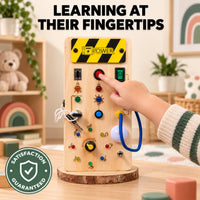
- Working the latches, zippers, buckles, and laces on a busy board packages many of these movements into one activity a child will return to on their own.
Outdoors
- Picking up small stones or acorns and dropping them into a bucket is pincer grasp practice in the fresh air.
- Drawing with chalk on the pavement builds the same grip and control as drawing on paper.
- Pulling weeds or planting seeds asks for a careful pinch and pull that little hands love.
A quick word on what is normal
Fine motor skills develop over years, not weeks, and children vary widely. The pincer grasp usually emerges in the second half of the first year and matures around the first birthday. Snipping with child scissors, threading beads, and drawing simple shapes come later, through the toddler and preschool years. If you have genuine concerns about your child's hand use or development, your pediatrician is the right person to ask, and asking early is always reasonable.
The goal at home is not to push. It is simply to offer lots of small, cheerful chances to use those hands, woven into a normal day.
Fine motor skills and easy ways to build them
Each of these skills grows through ordinary play, no worksheets required.
| Skill | Everyday ways to practice |
|---|---|
| Pincer grasp | Picking up small safe objects, threading large beads |
| Hand strength | Squeezing dough, using a spray bottle, tearing paper |
| Two handed coordination | Threading, opening containers, stacking |
| Tool control | Chunky crayons, child safe scissors, tongs |
| Fastening | Buttons, zips, and buckles on a busy board |
Frequently asked questions
What are fine motor skills?
They are the small, precise movements of the hands and fingers, like pinching, gripping, and manipulating objects. They underlie everyday skills such as using utensils, dressing, and eventually writing.
How can I improve my toddler's fine motor skills at home?
Offer daily chances to pinch, squeeze, thread, peel, and manipulate small objects: picking up snacks, stickers, play dough, pouring water, and hands on toys like busy boards. Everyday practice beats special equipment.
Why do fine motor skills matter?
They support independence in dressing and eating, and they build the hand strength and control a child will later use to hold and manage a pencil.
What toys help with fine motor skills for a two year old?
Busy boards with latches and zippers, chunky threading beads, shape sorters, stacking toys, and reusable drawing books all give repeated, enjoyable fine motor practice.
Many Bright Bloomer toys are designed around exactly these movements, with the latches, zips, and buckles that build hand strength through play a child chooses on their own. Still, the best fine motor program is an ordinary day with lots of small chances to use those hands. Snacks, stickers, and a sponge in the bath will take you a remarkably long way.