






Quick answer. You cannot prevent every toddler tantrum, and you should not expect to, because tantrums are a normal part of development. But many are triggered by boredom, tiredness, hunger, and hard transitions, and those you can reduce. Predictable routines, engaged hands on play, and staying connected head off a good share of meltdowns before they start.
First, the honest part, because it will save you a lot of guilt. Tantrums are normal. They are not a sign of bad parenting or a difficult child. A toddler has big feelings and a brain that is still years away from being able to manage them, so those feelings sometimes spill over. No toy and no technique will end that entirely, nor should it. Learning to weather big feelings is part of growing up.
That said, a real share of meltdowns are not deep emotional storms. They are the predictable result of a bored, tired, hungry, or overwhelmed child. Those are the ones you can head off, and engaged play is one of your best tools. Here is how it fits together.
Why toddlers melt down
Understanding the common triggers points straight to what helps.
- Boredom and under stimulation. A toddler with nothing to do finds trouble, and often finds a meltdown. Unspent energy and attention curdle quickly.
- Tiredness and hunger. A huge proportion of tantrums are simply a child who needs a nap or a snack. The feeling is real, but the fix is physical.
- Hard transitions. Stopping a fun thing, leaving the park, or switching activities is genuinely hard for a toddler, and transitions are a classic flashpoint.
- Big feelings with no words. Sometimes a child is overwhelmed and cannot yet say so. This is the kind of tantrum you ride out with calm and comfort, not one you prevent.

Shop this
Where engaged play helps
Engaged play does not stop the emotional storms, but it directly reduces the boredom and transition tantrums, which are a large share of the total.
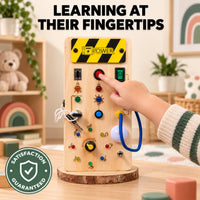
An absorbed child is not a bored child. When a toddler is deep in hands on play they have chosen, the restless energy that goes looking for trouble, and often finds a meltdown, has somewhere to go instead. Open ended toys that hold attention, a busy board, blocks, a busy book, are especially good at this, because a child can sink into them without an adult running the show.
Play also smooths transitions, which are a major trigger. A child who knows that after the bath comes a favorite quiet activity moves through the change more easily than one facing an empty gap. Having an engaging next thing ready turns a hard transition into a manageable one.
A simple plan to reduce the preventable meltdowns
You cannot control the emotional weather, but you can manage the conditions.
| Common trigger | What heads it off |
|---|---|
| Boredom | A small, rotating set of open ended toys within reach |
| Tiredness and hunger | Predictable nap and snack times, before the meltdown, not after |
| Hard transitions | Warn before a change and have an engaging next activity ready |
| The witching hour | Set out a calm, hands on activity in the pre dinner slot, in sight of you |
None of this makes a toddler tantrum free, and a child who never had a tantrum would actually be the unusual one. The goal is smaller and achievable: fewer of the avoidable meltdowns, and more calm in the gaps.
And when a real emotional tantrum does come, the response is not a toy. It is your calm, steady presence, keeping everyone safe and waiting it out with comfort. That, too, is teaching, just a different lesson.
Frequently asked questions
Can you prevent toddler tantrums?
Not entirely, and you should not expect to, because tantrums are a normal part of development. But you can reduce the ones caused by boredom, tiredness, hunger, and hard transitions, which are a large share of them.
How does play reduce tantrums?
Engaged, hands on play absorbs the restless energy that leads to boredom meltdowns, and having an engaging next activity ready smooths the transitions that so often trigger them.
What are the most common tantrum triggers in toddlers?
Boredom, tiredness, hunger, and difficult transitions are the everyday ones. Some tantrums are simply big feelings a child cannot yet manage or express, and those are ridden out with calm.
What should I do during an actual tantrum?
Stay calm, keep everyone safe, and offer comfort rather than trying to reason a child out of a storm. Many tantrums pass fastest with a steady, patient presence.
Bright Bloomer designs open ended, hands on toys that hold a toddler's attention, precisely the kind of absorbed play that heads off the boredom and transition meltdowns. Pair them with predictable naps and snacks and a warning before transitions, and you will smooth over many of the avoidable ones, while meeting the real emotional storms with calm.